

Fast shipping
Secure payments - 100% Secure
PAY PAYPAL STRIPE BANK TRANSFER
CUSTOMER SERVICE
My ACCOUNT
Express courier
TNT DHL UPS
Via Asseggiano 43D
VENICE MESTRE
30174 ITALY
WHEN THE PEN WAS USED..... MAGICAL VENICE THE ARTISTIC GLASSMAKING
info@pergamos.it
TERMS AND CONDITIONS PRIVACY AND COOKIE POLICY RIGHT OF WITHDRAWAL PRIVACY INFORMATION CONTACT INFORMATION
© Giampaolo Sardi P.I. 02260660275
Magical Venice
The beginnings
It is difficult to reconstruct the founding of Venice with an exact date. With the fall of the Roman Empire and the invasion by the Huns and the Germans from the north, many inhabitants of what is now Veneto took refuge in the lagoon seeking protection. The first settlements were built on the islands of Torcello, Murano and Lido (then Malamocco). In 697, under the protection of the Eastern Roman Empire, the first doge was appointed. He initially resided on the Lido of Venice, trying to unite the hostile islands. However, when Pepin, son of Charlemagne, occupied the lagoon and destroyed Malamocco, the enemy islands united and founded a new city on the central group of islands along the Rivus Altus (Rivo Alto, that is, today's Rialto) – thus the Venice we know was born.
The rise of Venice as queen of the Adriatic
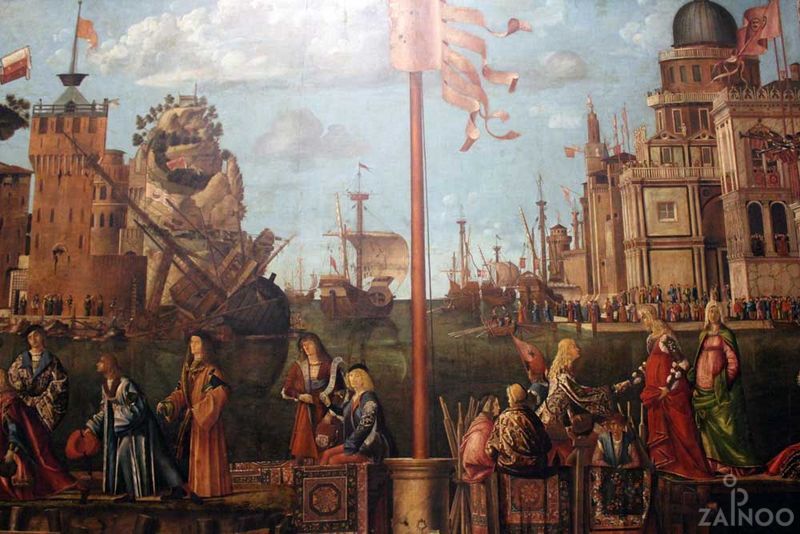
In 812 Venice became a Byzantine province – under the protection of the Eastern Roman Empire, the city was able to develop at its own pace. In 828 Venetian merchants stole the mortal remains of the evangelist Mark of Alexandria. Thus a patron was found for the city and its symbol, the winged lion, became from that moment on the emblem of Venice. Living on the water, Venetians were excellent navigators and outstanding merchants. Thanks to the support of Byzantium, which opened all ports to the Venetians, the lagoon city quickly developed into a commercial power that achieved an exceptional state of prosperity. Following the flourishing trade, Venice finally became the largest financial center in Europe. Thanks to a powerful military fleet, Venice was able to gradually conquer Friuli, Istria, and Dalmatia. Furthermore, it took advantage of the fourth crusade to the Holy Land to attack its former protector, the Eastern Roman Empire, and occupied Constantinople. With the conquest of Byzantium, Venice became the mistress of the Greek islands in the Aegean Sea. Many artistic treasures, including the horses on the St. Mark's Basilica, were imported to Venice. In 1381 it managed to defeat its sworn enemy, Genoa, at Chioggia and from that moment on the ducal republic dominated the entire eastern Mediterranean area. Venice itself grew rapidly and with 150,000 inhabitants became the third largest city in Europe after Paris and Naples. Thus a European power was born – the queen of the Adriatic.
The queen of the Adriatic
Decline of a proud maritime power
With 3,900 merchant ships and 15,000 sailors, Venice dominated trade in the Mediterranean area. Within the state there was particular stability and apart from the poorly equipped mainland, this maritime power did not have to fear any danger. Without delay, much of the mainland was also conquered; Padua, Vicenza, and Verona were gradually integrated into the Venetian empire. It reached its greatest expansion and thus the peak of its power with the conquest of Cyprus. In 1453 the situation began to change after the conquest of Constantinople by the Ottomans. Venice was involved in a war against the Turks that lasted 300 years. In the same period, with the discovery of America, the commercial center shifted from the Mediterranean area to the Atlantic. New great powers arose in Europe and Venice slipped more and more into political isolation. In the League of Cambrai, Austria, France, and Spain formed an alliance against the Republic of Venice. Despite the last great success in the naval battle of Lepanto against the Turks, the Venetian empire began to crumble from all sides. After two cruel plague epidemics (1575 and 1630) and further wars against the Ottomans, Venice decided to abandon its possessions in the Mediterranean area to concentrate on defending its properties around the lagoon.
Venice: From modern times to today
Towards the end of the 18th century Venice experienced a cultural flourishing, but politically it was a shadow of its former self. When in 1797 Napoleon arrived in front of the lagoon, the city surrendered without a fight. Napoleon plundered the city and soon after handed it over to the Austrians who integrated Venice into the Habsburg Empire until 1866. The Austrians modernized the lagoon city and for the first time connected it to the mainland via the railway bridge. In 1866 the Habsburgs withdrew from Venice and handed the lagoon city over to the new Kingdom of Italy. Poverty and economic decline characterized the following years. Only after the First World War, the port was moved to Marghera, beginning with the organization of heavy industry. With the development of modern tourism in the second half of the 20th century, the renewed rise of Venice also began, which has continued to this day. Whether this success story of Venice will continue in the future will depend predominantly on how the environmental problems of the lagoon are resolved.

Fast shipping
Secure payments - 100% Secure
PAY PAYPAL STRIPE BANK TRANSFER
CUSTOMER SERVICE
My ACCOUNT
Express courier
TNT DHL UPS
Via Asseggiano 43D
VENICE MESTRE
30174 ITALY
WHEN THE PEN WAS USED..... MAGICAL VENICE THE ARTISTIC GLASSMAKING
info@pergamos.it
TERMS AND CONDITIONS PRIVACY AND COOKIE POLICY RIGHT OF WITHDRAWAL PRIVACY INFORMATION CONTACT INFORMATION
© Giampaolo Sardi P.I. 02260660275