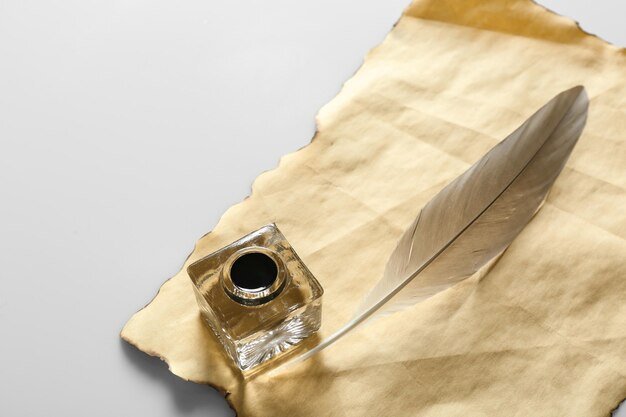
The idea of using signs to represent and communicate thoughts and words was one of the greatest feats of human imagination: it may even be that the invention of writing facilitated social and cultural development more than any other idea. In some books it is written that in the oldest societies, the knowledge of writing was more than a privilege, it was a social function, linked to religion and the art of governing. It is not known when and how people began to write; in various texts it is stated that men were already writing several centuries before 3000 BC, since clay tablets written by the Sumerians of Mesopotamia from around that time have reached us, in which the first forms were certainly pictorial. Pictorial writing, now considered the first stage of true writing, consists of drawings that follow one another to form a narrative or a chain of ideas. From pictorial writing, people moved on to ideographic and then analytical writing, up to the invention of phonetic systems—first syllabic and then alphabetic—which made writing simpler, increasing its flexibility and greatly reducing the number of necessary symbols. Writing represents a universal means of communication, and doing calligraphy means paying attention to the rules of beauty and harmony that govern the shape of letters. The Romans also took great care in designing and carving the letters of official inscriptions, so much so that even today Roman-style letters are among the most beautiful, readable, and balanced. In Italy, "cursive" was born, that is, writing slanted to the right. This style gives a sense of great elegance but also greater informality and moves away from the solemnity of Roman capitals. The Papal Chancery, for example, sent letters in this style to various bishops and rulers, so much so that it became the typical "royal" style. In fact, from the word "chancery" comes its name "cancelleresco" (used in Italy) or "cancery" (used in England). The Anglo-Saxons still call cursive Italic because they saw it on letters coming from Italy. For Western culture, Italy represents an important reference point, having built in two thousand years of history a very rich heritage of scripts still considered fundamental models today, such as the original calligraphies that our predecessors used in the periods from the 5th century BC to the 18th century, such as: rustic, Roman square capitals, uncial, Gothic, chancery cursive, round, and English cursive. Technology and the spread of computers everywhere have meant that the pen is almost no longer used. Even in schools, "beautiful handwriting" no longer exists. When the pen was used..


Fast shipping
Secure payments - 100% Secure
PAY PAYPAL STRIPE BANK TRANSFER
CUSTOMER SERVICE
My ACCOUNT
Express courier
TNT DHL UPS
Via Asseggiano 43D
VENICE MESTRE
30174 ITALY
WHEN THE PEN WAS USED..... MAGICAL VENICE THE ARTISTIC GLASSMAKING
info@pergamos.it
TERMS AND CONDITIONS PRIVACY AND COOKIE POLICY RIGHT OF WITHDRAWAL PRIVACY INFORMATION CONTACT INFORMATION
© Giampaolo Sardi P.I. 02260660275
When the pen was used..
When the pen was used..
2025-04-04 11:32
2025-04-04 11:32
Array() no author 92976
Fast shipping
Secure payments - 100% Secure
PAY PAYPAL STRIPE BANK TRANSFER
CUSTOMER SUPPORT
My ACCOUNT
Express courier
TNT DHL UPS
Via Asseggiano 43D
VENICE MESTRE
30174 ITALY
WHEN THE PEN WAS USED..... MAGICAL VENICE THE ARTISTIC GLASSMAKING
info@pergamos.it
TERMS AND CONDITIONS OF CONTRACT PRIVACY AND COOKIE POLICY RIGHT OF WITHDRAWAL PRIVACY INFORMATION CONTACT INFORMATION
© Giampaolo Sardi P.I. 02260660275